

Why Men Hate Chappell Roan
When women abandon patriarchy and men, the feathers of the XYs are ruffled

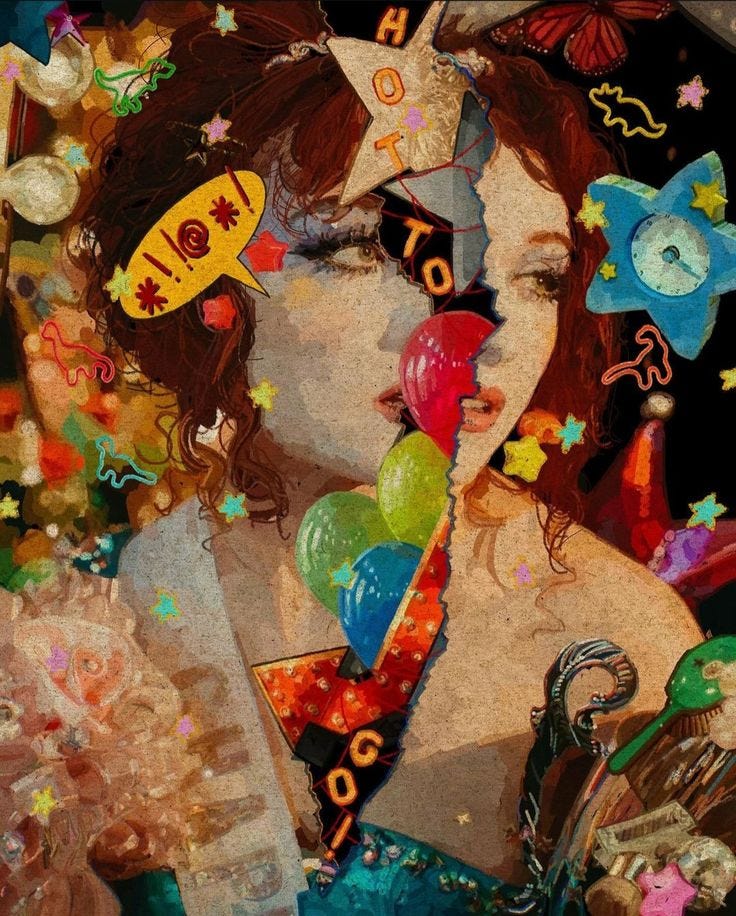
Artist: peachcreep
︶⊹︶︶︶︶⊹︶
Also published on Culture Vulture:

I have never seen so many men enraged at a red, curly-haired and white-painted face persona dancing on stage. Chappell Roan isn’t a new name. She’s been in the game for over a decade, but her recent catapult into ultimate fame sent the masses at her, both fans and the other, far worse thing.
Content about her is often filled with comments of men hurling insults her, from those attacking her identity to her career, calling her an industry plant and cussing her out to the ends of the earth. There’s anger. Hatred. Frustration.
When I say hate, I don’t mean a simple dislike for her pop songs or her aesthetics, I mean vitriol, the kind accompanied with slurs, insults, the relentless and utterly vulgar attacking of other women attempting to defend her. I’m talking about comments and hatred accompanied by overtly misogynistic sentiments. Now, to me, it’s no surprise that a woman, who’s a successful artist for remaining true to herself, her craft and her project, is receiving so much hate from a large number of men. However, the hatred expressed towards Chappell Roan is not solely because she’s a successful woman — it’s because she’s a woman who’s entirely decentered men from her art and craft, oh and she's not attracted to them. Like at all. That’s a big one here.
Her style is specific — she pulls from stars and icons who came before her, and everything is big, colourful, bright, hyper-feminine and bordering gaudy in the best ways possible. Her visuals are ugly to many men. They’re not meant to attract them and she doesn’t want to attract them — when someone who doesn’t care about men, doesn’t speak on them all too much (unless they’re humorous jabs), dresses for the ‘girls’, and dances to the beat of her own drum, men lose their minds.
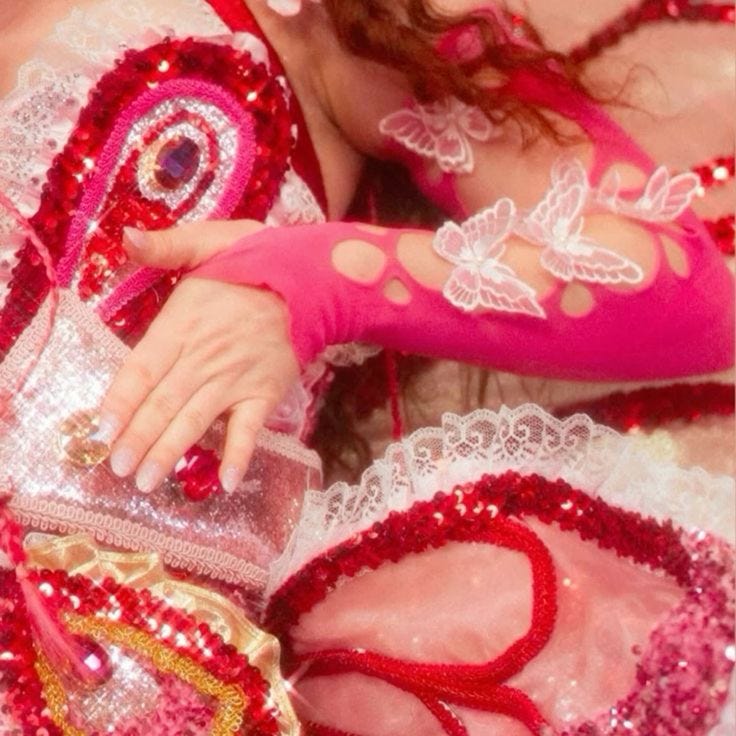
If it wasn’t enough that she walks onto stage dressed as a giant ‘don’t give a f*** about men’ butterfly on stage, she’s also very vocal in standing up for herself. By now, the videos have probably reached us all — Chappell Roan yelling back at a rude photographer, Chappell Roan demanding an apology from the man who mistreated her on the red carpet, and Chappell Roan saying she’d probably be more successful if she “wore a muzzle”.
She’s wonderfully loud, demands her boundaries to be respected, is fiercely protective of herself and her wellbeing, and gosh they can’t stand it. Not only are they obviously hateful of her sexual orientation but they also cannot stand that something doesn’t exist for them. That a woman doesn’t exist for them.
Within a patriarchal world, where men have been conditioned to believe that women’s success, attention, and art should, in some way, revolve around them, Chappell Roan’s existence is a threat. A woman thriving, adored, and celebrated without male validation is an attack on their entire worldview. Her flamboyance, her refusal to cater, her complete and utter disregard for the male gaze—it’s too much. They don’t just dislike her; they resent her. They fear her.
Maggie Nelson once wrote, "the feminist killjoy takes pleasure in the work of interrupting the patriarchal norms that shape how we live and love." This interruption—this complete decentering—creates dissonance. When something does not serve them in a patriarchal world, when someone pushes the envelope and entirely steps out of the realm they control, it enrages them. It unsettles them. Their world is built upon the expectation that women’s existence will, in some way, validate or gratify them. When that expectation is shattered, when a woman creates a universe in which they are unnecessary, their anger is not just about the art—it is about the dissolution of their perceived dominance.
This reaction isn’t new. Women who reject patriarchal structures or ideals—whether through art, politics, or personal identity—are consistently met with backlash, and even violence. History is rife with women who defied expectations and were vilified for it. From the condemnation of witches in early modern Europe, putting women in asylums due to “female hysteria” and now, to the misogynistic slander of modern-day pop stars and women alike, as well as the relentless threats towards them, the pattern remains the same: when women refuse to conform, they are punished.
The space and entire ecosystem Chappell and Misha (Ramisha Sattar) created, is one where cis-men are irrelevant. The theory of hegemonic masculinity created by Raewyn Connell directly offers context for this panic men experience (which is at times dealt with through violence, arrogance and hatred)1. Sociology and the theory of hegemonic masculinity recognize the fragility of masculinity as a social concept and that men are conditioned to derive self-worth from their dominance over women. When women create spaces outside of men, it triggers a crisis in them because masculinity within a patriarchal society is defined by power over others—especially women. Now, when that power is perceived as faltering, the panic begins and the feminist killjoy is butchered in a slew of hateful speech.
Yes, Chappell and those who emulate her radical self-acceptance and decentering of men, are the very representations of what Sara Ahmed’s idea of the feminist killjoy2. The “feminist killjoy” is a figure who disrupts the norms that keep patriarchy intact and when women reject male expectations—whether by refusing to cater to them, rejecting their approval, or calling out their behavior (of which Chappell has done all of)—it creates discomfort. This discomfort, rather than leading to self-reflection, often manifests as rage, often due to socialization and the normalization of men’s anger.
Chappell has become greater than herself. If you look at all of this through a sociological lens (something I specialized in while studying my BSc in Psychology), men don’t just hate Chappell Roan or her fans, men hate not retaining privileges in every space that exists. This could be conscious, this could be unconscious — but the fact remains that people like her are challenging more than just popstar and Hollywood norms, she’s challenging the patriarchy in her own corner of the world, a system so deeply enmeshed with everything we touch except for (to a degree) her world and those women create for themselves.

Artist: Ramisha Sattar
That’s not to say that Chappell will save the world from patriarchy, or that she’s going to be the avalanche that starts a wider movement (because broader systemic change requires more than just one pop star’s existence) but that she is a person that elected to do something courageous in the face of millions. She decided to say no to a system, to people, to “norms” that bully, oppress to varying degrees, and she decided to stand up for herself and others, including Palestine and refusing to endorse political parties due to their awful policies. She’s grabbed the mic in her manicured nails, and she’s making her time count. She’s building her world, and it bars the patriarchy out, it gives other women the power to do the same. She emboldens.
That is why men hate Chappell Roan — they can’t get in and their promised all-opening key means nothing here, and their words of protest fall on deaf ears as the women troop onwards.

Raewyn Connell’s Masculinities
Living a Feminist Life Book by Sara Ahmed
What an intelligent and beautifully written analysis! 🦋
loved this <3